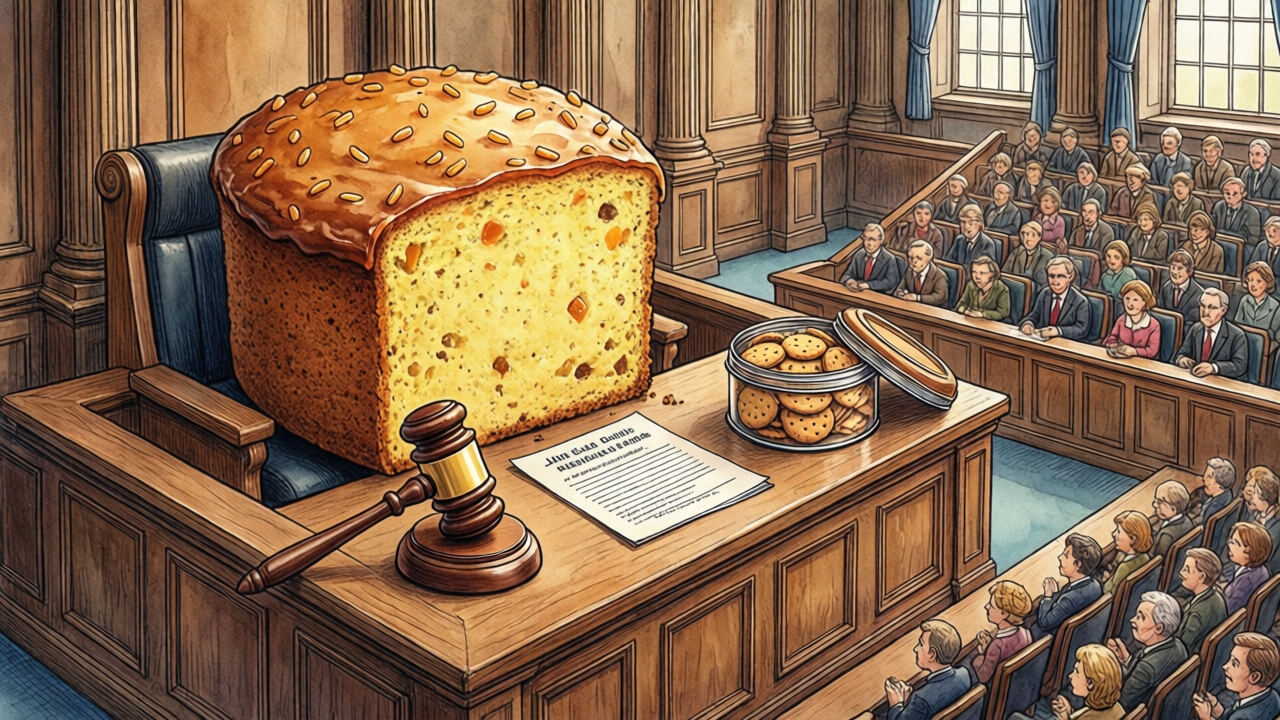
Sometime in 1991, in a room that smelled of carpet and ambition, a British tribunal received into evidence a large round object the size of a dinner plate, and the country’s soberest legal minds spent the afternoon examining what happened to it as it went stale. This was not an obscenity trial, nor a dispute over the sale of fish, nor — for the record — a debate about whether a hot dog is a sandwich, because thank God that has never happened here. The citation was LON/91/0160, a case number like any other, but the nation has since renamed the whole affair after the exhibit, and when a country re-titles legal history after a snack, the verdict has rather happened on its own.
The case was United Biscuits, and the exhibit was the Jaffa Cake. Customs and Excise had quietly treated Jaffa Cakes as cakes since VAT began in 1973 — though, according to HMRC’s own internal manual, “always with misgivings.” Misgivings, left alone long enough, mature into a review; the review concluded that the Jaffa Cake was in fact a biscuit partly covered in chocolate and should be taxed like one. McVitie’s appealed, and a VAT tribunal was obliged to answer, under law, the question every office kitchen has been shouting at the biscuit barrel since childhood: what is the thing with the jelly in the middle?
The cake — for it was always going to be called that again — arrived in 1927, produced by McVitie & Price and named after the Jaffa orange, which was fashionable at the time in the way oranges are allowed to be fashionable once and never again. The anatomy hasn’t changed since: a disc of sponge fifty-four millimetres across, a film of orange jam, a chocolate lid. Forty-six calories, which the marketing mentions the way one mentions a minor motoring conviction at a job interview.
The tribunal weighed the evidence the way a pub quiz weighs cruelty, factor by factor. Ingredients: the sponge was an aerated batter of egg, flour and sugar — cooked like a cake, not a dough — which gave it an alibi, and a good one. Texture: a cake is soft and friable; a biscuit is crisp and snaps; the Jaffa Cake, subjected to the most rigorous tactile examination in British legal history, was squidgy. Size: biscuit. Packaging: sold in packets like biscuits. Marketing: displayed with biscuits. Three for the Crown in a row, which is precisely why nobody should have been surprised the thing went to trial at all.
Then came the forensic evidence, and it is the part that made the case immortal. A cake going stale goes hard. A biscuit going stale goes soft. A Jaffa Cake goes hard. The nation’s oldest breakfast-table argument — is it a cake, is it a biscuit — was settled not by philosophy but by the humble technique of leaving the evidence in a biscuit tin overnight, whereupon it surrenders moisture to the digestives and goes firm itself. That is not a joke. McVitie’s actually made this argument, in court, on oath, having baked a twelve-inch Jaffa Cake and led it in as an exhibit to demonstrate that size has nothing to do with cake status. The tribunal was unimpressed by the giant, which is the most sensible thing a tribunal has ever said.
One earlier precedent weighed against the sponge: Adams Foods’ Chocolate Dundee, an old-style shortcake on a chocolate base, which an earlier tribunal refused to classify as cake and sent off to be standard-rated like a common wafery. Any solicitor worth his sandwich would have cited the Dundee. It didn’t matter. The chairman, Donald Potter, took as his test the ordinary meaning of the word “cake” — and then rejected the expert evidence on the grounds that it went “beyond the capacity of an ordinary purchaser.” The tribunal looked at the food scientists, decided they knew far too much about sponge, and showed them the door. That is the most British judicial act on record.
Judgment: cake. Zero-rated. And the national press, to a man and woman, was delighted. For weeks, Britain’s newspapers ran the story with the tone of uncles at a wedding — a real court had ruled on a real cake, the funniest case in living memory was real. McVitie’s won the verdict and then did something very British with it: they had never registered the name, so “Jaffa Cake” belongs to everyone. Every own-brand sponge on the shelf is now legally identical to the victorious exhibit, bound by the precedent of its own rival. You can win the case and lose the nameplate. It happens.
Today every McVitie’s Jaffa Cake in the country is produced in Stockport, on a production line over a mile long, at a rate north of two thousand a minute — enough litigation-grade sponge to fill a biscuit barrel the size of a phone box every hour — and in 2012 the Jaffa Cake was ranked the best-selling cake or biscuit in Britain. Read that category again. The court refused to recognise a hybrid; the market invented one and named its champion after the case that settled it. The tribunal won the argument and lost the language, which is roughly how most arguments in this country end.
So the next time someone at the office kitchen counter insists the Jaffa Cake is “basically a biscuit,” you may now respond with the one thing that has never once failed in a break room: case number, judgment, year. It is a cake. It has been checked. It went hard, not soft, and it was never the Dundee.
Cook it anyway if you fancy: bake shallow discs of Victoria sponge, spread thin orange marmalade — jam, if you’re not trying to provoke anyone — over the top, lid them with melted chocolate, and cool until set. An honest facsimile, forty-six calories’ worth by honest reckoning not. And if anyone at the table disputes what it is: the judgment stands, the appeal is dismissed, and the pudding, unusually for Britain, is on the side of the angels.