There was a kind of building that used to sit on every British trunk road like a promise: fluorescent tube, big windows, a NEON sign that said OPEN and meant it at four in the morning. Inside: formica tables bolted to the floor, chairs you could slide in on, a salt grinder with a grip pattern worn smooth by a thousand hands, and a pot of tea so strong it had opinions about your career choices. The transport caff. It was the mainstay of the lorry drivers who worked the A1 and the A6 before there were motorways — canteen, post office, and meeting room in one, so trusted that trade unions conducted branch business in its back room, between the bacon and the chips.
It is exactly sixty-seven years ago today — 2 November 1959 — that the first proper length of the M1 opened, running from Watford up to Crick near Rugby, along with its little spur roads. The early M1 had no speed limit, no crash barriers, no lighting, and soft verges, which is how you know it was optimistic rather than dangerous. Watford Gap service area sat at its top, open twenty-four hours at a time when pubs closed at eleven, and the Rolling Stones were known to drive fast up it purely to get there. The future arrived at eighty miles an hour, and it drove straight past the caff’s front door.
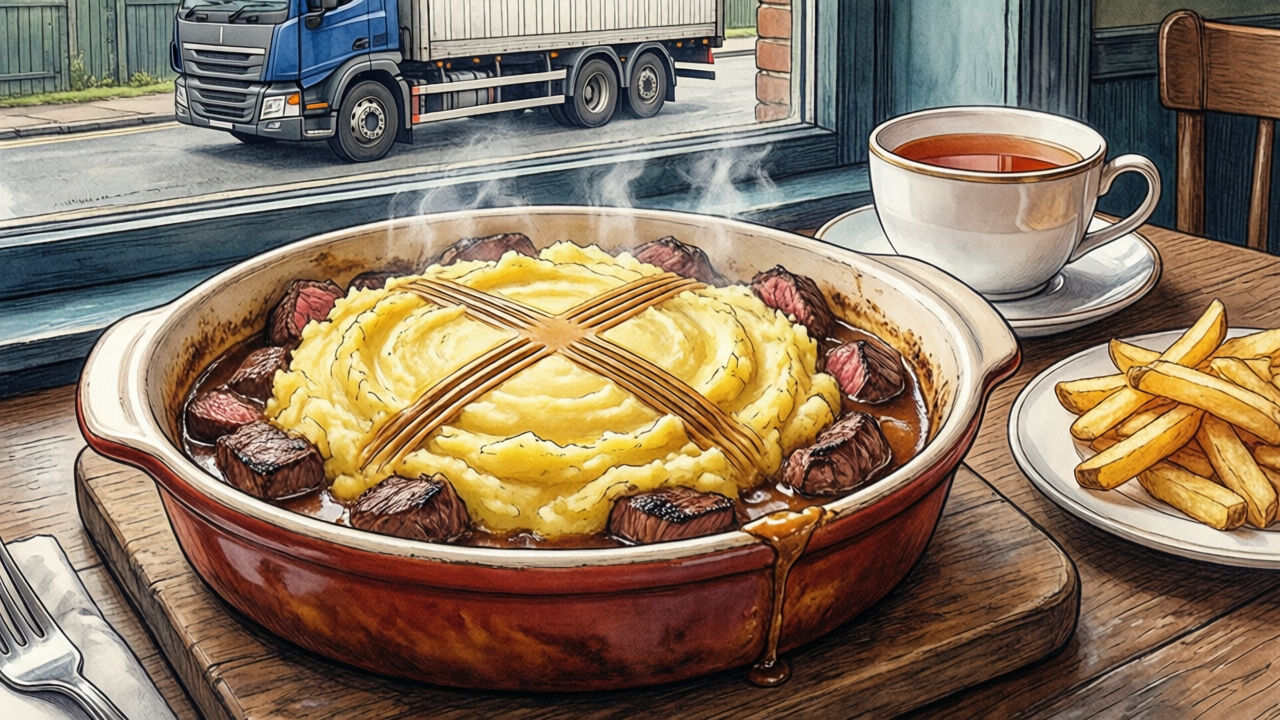
But here’s what the service stations never managed to kill off completely: the caff’s best dish was never on the griddle. Behind the fry-up, every proper caff had a baked dish waiting in the oven — a steak and kidney pudding, which is what happens when a pie is sent to bed early and given a duvet of mashed potato instead of pastry.
Ingredients
- 700g braising steak, in 3cm cubes (chuck is the butcher’s word for it; the butcher’s face is part of the deal)
- 2 ox or pig’s kidneys, from the meat counter — fat sliced off, grey tube in the middle cut out, then chopped into 2cm pieces
- 2 large onions, sliced
- 2 carrots, thickly sliced — chunky, they’ve a long journey
- 2 tbsp plain flour, plus a teaspoon of English mustard powder
- A good splash of dark ale (the black stuff; the kind the caff had on tap before lunch)
- 500ml beef stock, plus an extra splash for later
- 1 bay leaf, a few sprigs of thyme, Worcestershire sauce
- 1kg floury potatoes, butter, a splash of hot milk — for the mash
- Butter for the steak, oil for the onions
Method
- Dry the steak cubes and brown them hard in butter, in batches, without crowding the pan. Crowding is how you get grey meat, and the pan can only do one thing at a time: like the A1 through town, everyone wants to go at once and nobody does.
- Lift the beef out and put the onions and carrots in the same pan. Do not wash the pan. The sticky brown bit at the bottom is the fond, and the fond is the difference between a stew and a rumour. Some caff pans haven’t been properly washed since the Wilson government; while we won’t recommend that, we also won’t prosecute it.
- Stir the flour and mustard powder into the veg, cook a minute, then pour in the ale off the heat, where it can fizz like a man who’s just been told the M1 is going through his village. Return the beef, add stock, bay, thyme and a good slug of Worcestershire.
- Lid on, low oven (about 150C), and leave it alone for two to two and a half hours. This leg of the job is the M1 itself: no speed limit, no barriers, nothing to stop you — the beef will get where it’s going long before you expected.
- Thirty minutes before the end, stir in the chopped kidney and put the lid back on. Kidney stewed from the very start turns rubbery, and a rubbery kidney is the caff’s one deserved bad reputation. Add it late and it comes out tender — kept short, but treated right.
- Meanwhile, boil and mash the potatoes with a good knob of butter and hot milk. The mash should be loose enough to spread like tarmac on a warm day, and hold a peak like a speed camera housing.
- Spoon the filling into a baking dish — gravy included, the gravy is the whole point, thin it with a splash of stock if the reduction has gone full waiting-list — and spread the mash over to the edges, sealing it all the way round like the caff sealing off your table from the next coach party.
- Drag a fork across the top in criss-cross ridges. All caff mash has fork marks, because tarmac has expansion joints and the caff copies nothing less than infrastructure.
- Bake at 200C until the peaks are brown and the gravy is bubbling out at the edges of the dish — the puddle that means the pie’s ready, and the only announcement system the caff ever trusted. Ten minutes’ rest before serving, which is more than the average caff table gets between coach loads.
Serve with buttered greens if you’re feeling virtuous, which in a caff you aren’t, or chips if you’re feeling honest. There’s no vegetarian version of this one and we’re not going to insult the kidney by pretending otherwise — the last proper dish on this blog was entirely veggie, and balance is balance.
The pudding keeps three days in the fridge and freezes well, which is a longer and better record than most of the cafés themselves managed once the new road opened. The bypass always wins in the end — but it won’t do your tea, and it has never once produced a pudding like this. Reheat gently, with the patience of a man who has a long run tomorrow and nowhere to be until he’s finished.