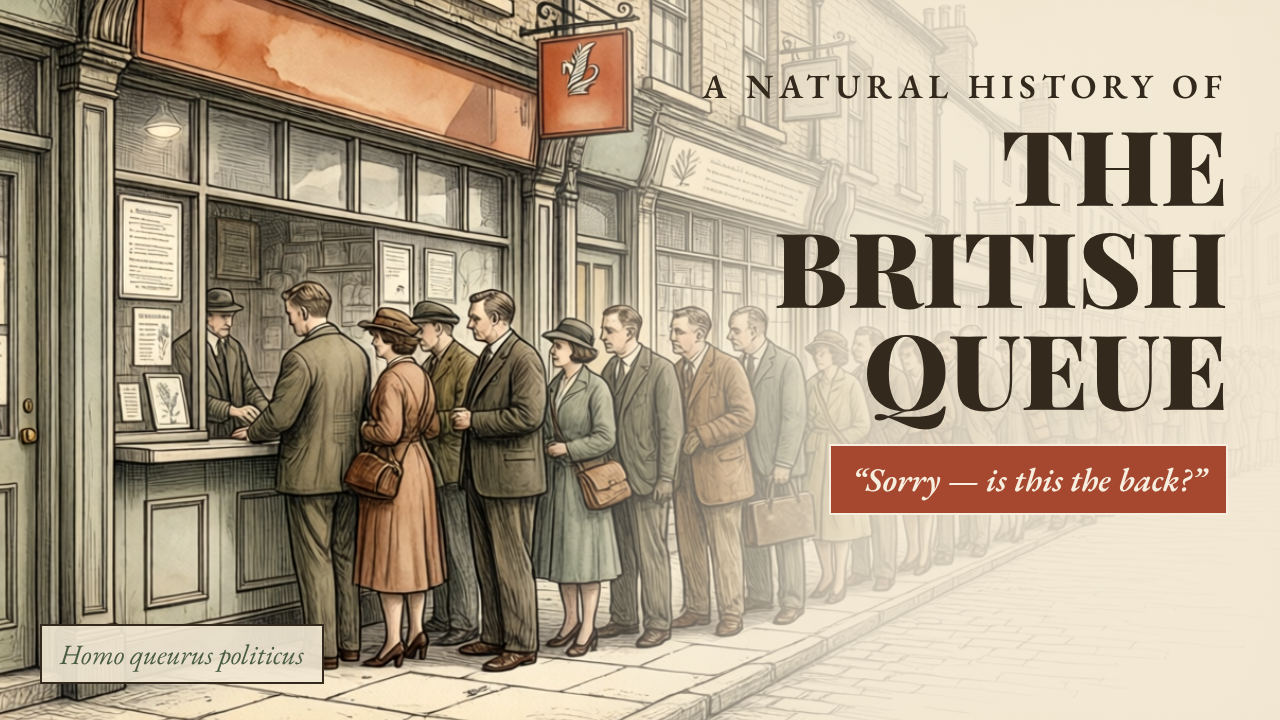
Dusk on the high street. The shutters rattle down, the last bus wheezes off, and yet — there they remain. Outside the one shop still open. Motionless. Patient. Almost serene.
The British queue is one of the most successful social species on these islands, and almost nobody has ever stopped to observe it. I usually write about eggs at half three in the morning. Tonight, something grander. Tonight, we go wild.
A queue will form wherever there is one counter and two people who would rather not make eye contact. You don’t organise a queue. It simply grows — like ivy on a wall, or mould in a student hallway. By the time you notice it, there are nine people in it, and every single one knows their place.
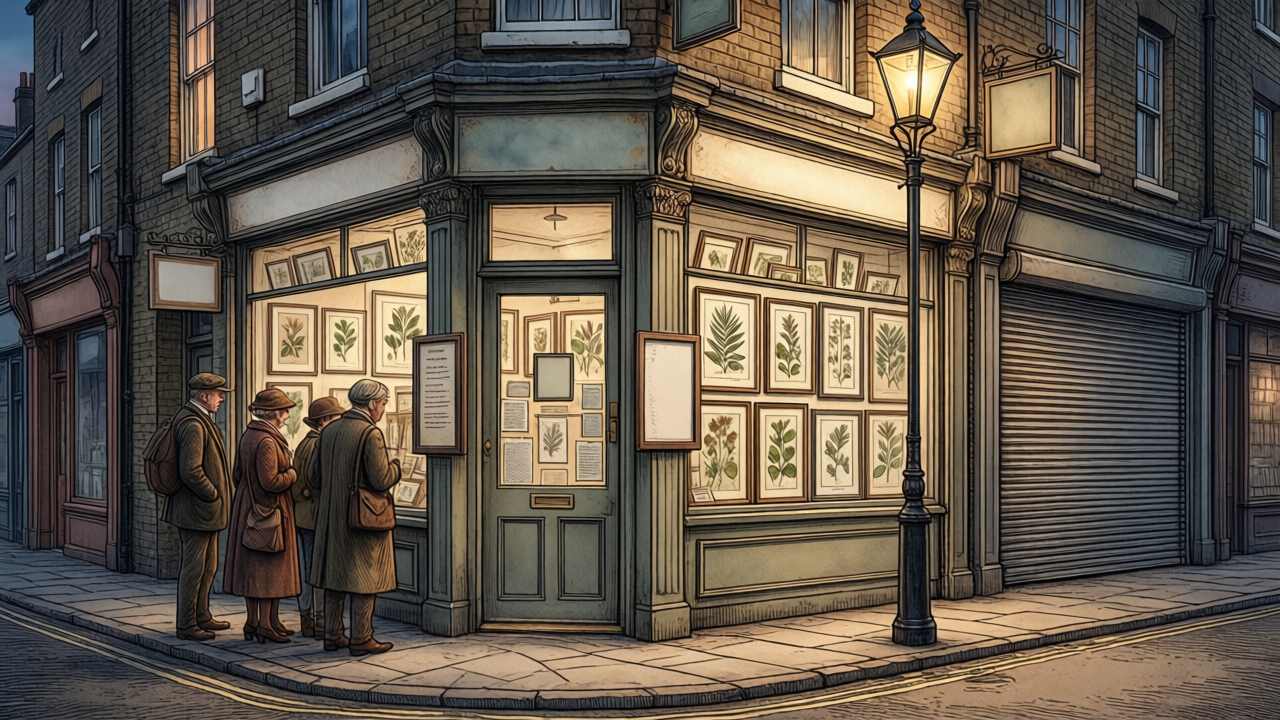
Anatomy: head, middle, tail
A queue has a head, a middle, and a tail. The word “queue” is simply the French word for tail, first appearing in print to mean a line of people in the 1830s — and the etymology is perfect, because the entire animal is a tail. Every person in it wants to be at the front, and every one behaves, in public, as though they would rather be anywhere else. This is called politeness. Biologically, it is a lie.
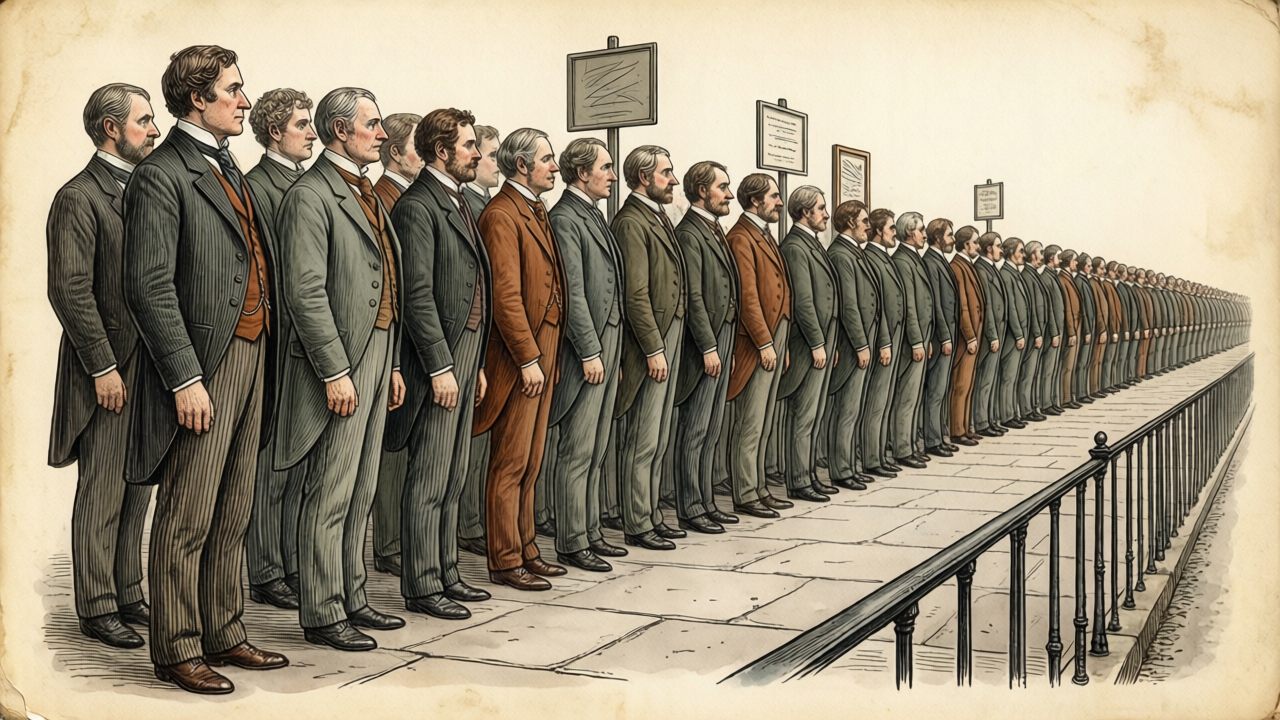
The tail negotiation
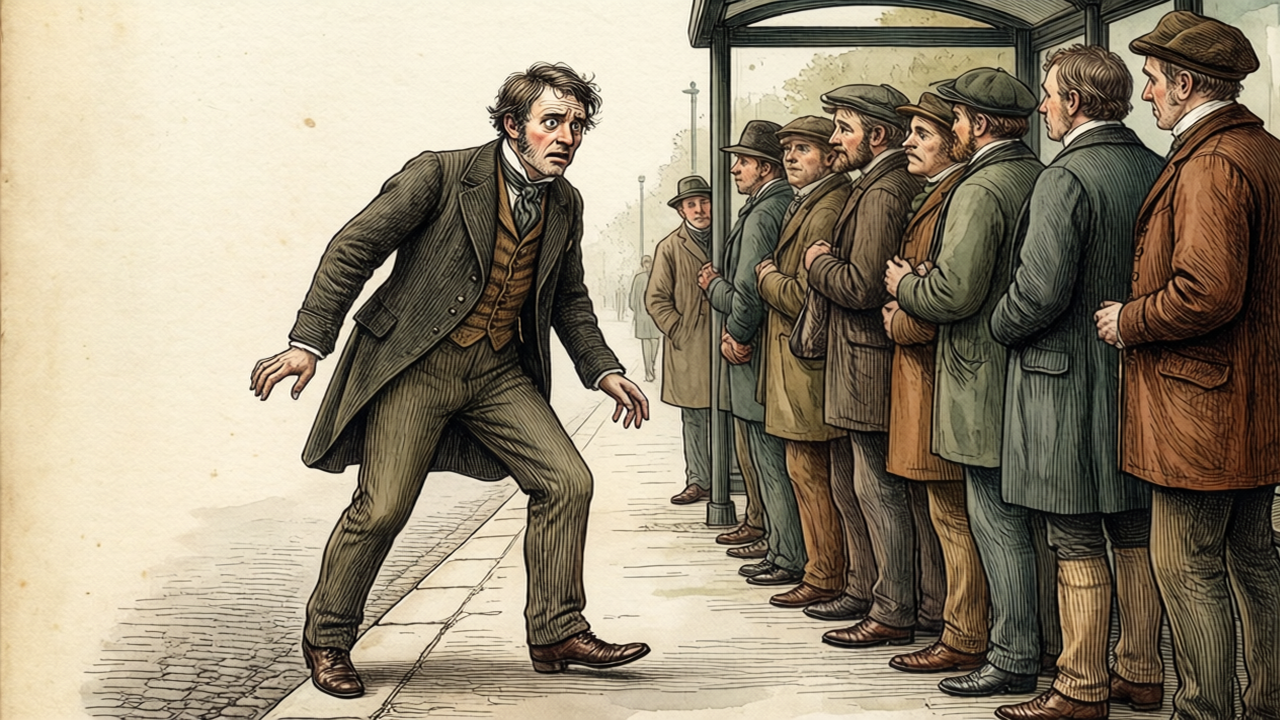
Which brings us to the most dangerous moment in queue life: the tail negotiation. A lone human approaches, stops at an ambiguous distance, and asks the question that will decide the social order of the next fifteen minutes.
“Sorry — is this the back?”
The person asked has about six possible answers, and every one is a small declaration of war. “Yes” implies the questioner can see. “No, the real queue is over there” implies the questioner was born without eyes. So we give the only safe answer: “You’re more or less at the back.” Which means nothing. Satisfies nobody. And has kept the peace for two hundred years.
Subspecies
Over the generations the species has produced an astonishing variety.
The trolley barnacle attaches to a shopping trolley, drifts beside the queue, never quite joining, never quite leaving. Its purpose is unknown. Its front wheel is faulty.
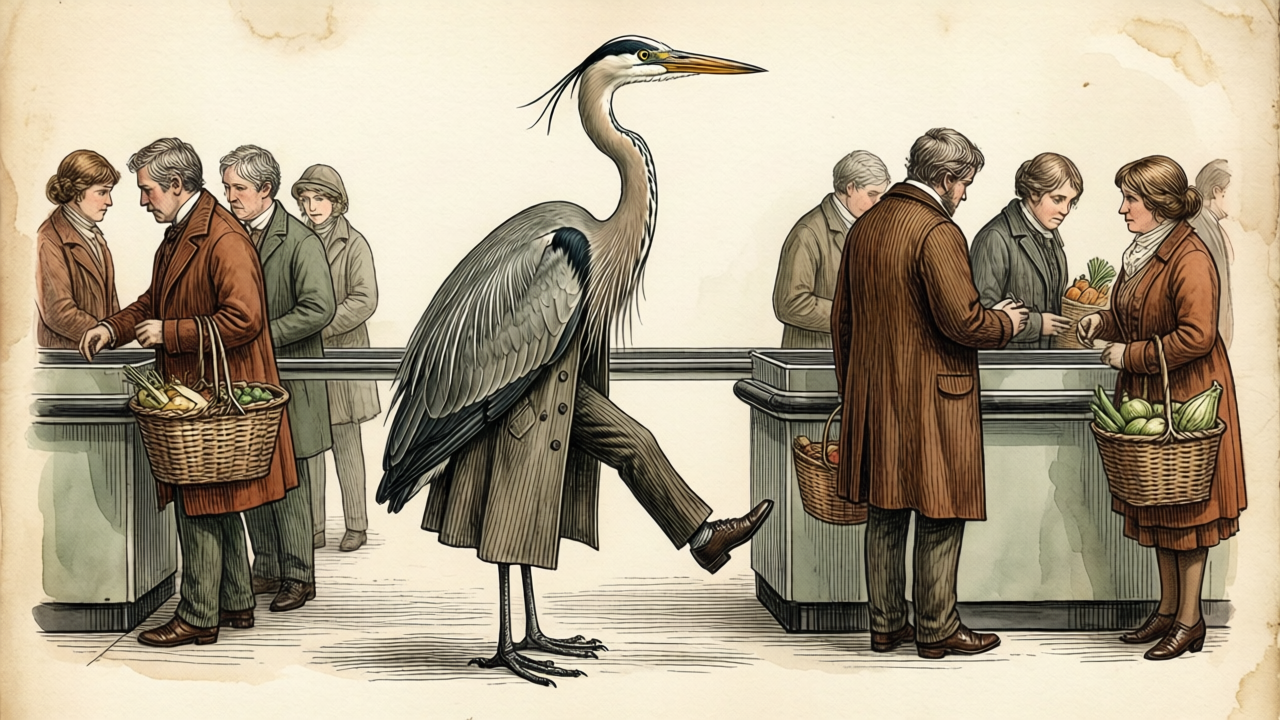
The express-lane heron stands motionless in the four-items-or-fewer line for twenty minutes. Perfectly still. And then, at the very last moment, it produces a twelve-pack of fizzy drinks and pretends it had it in the basket all along. Nobody challenges the heron. The heron has wings.
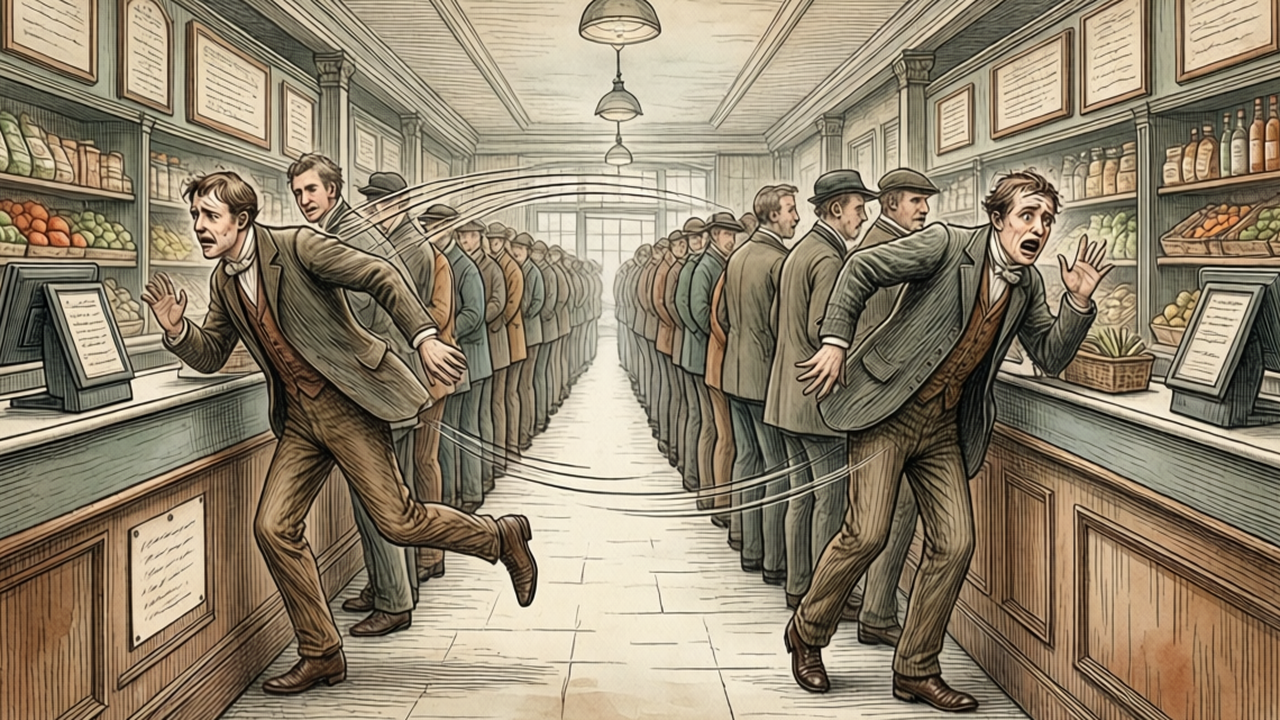
The migratory wigeon is the most successful of all. It leaves the queue at the post office, walks all the way around the block, returns to precisely the spot it left, and is welcomed back as if it had merely been resting. It gets away with this because it has walked two hundred metres. It has earned its place.
The queue-hopper, by contrast, abandons one queue, joins the front of another, convinced the other line is faster — and pays, every single time, with twenty minutes of existential regret. It is the only reliable law of British physics.
The science
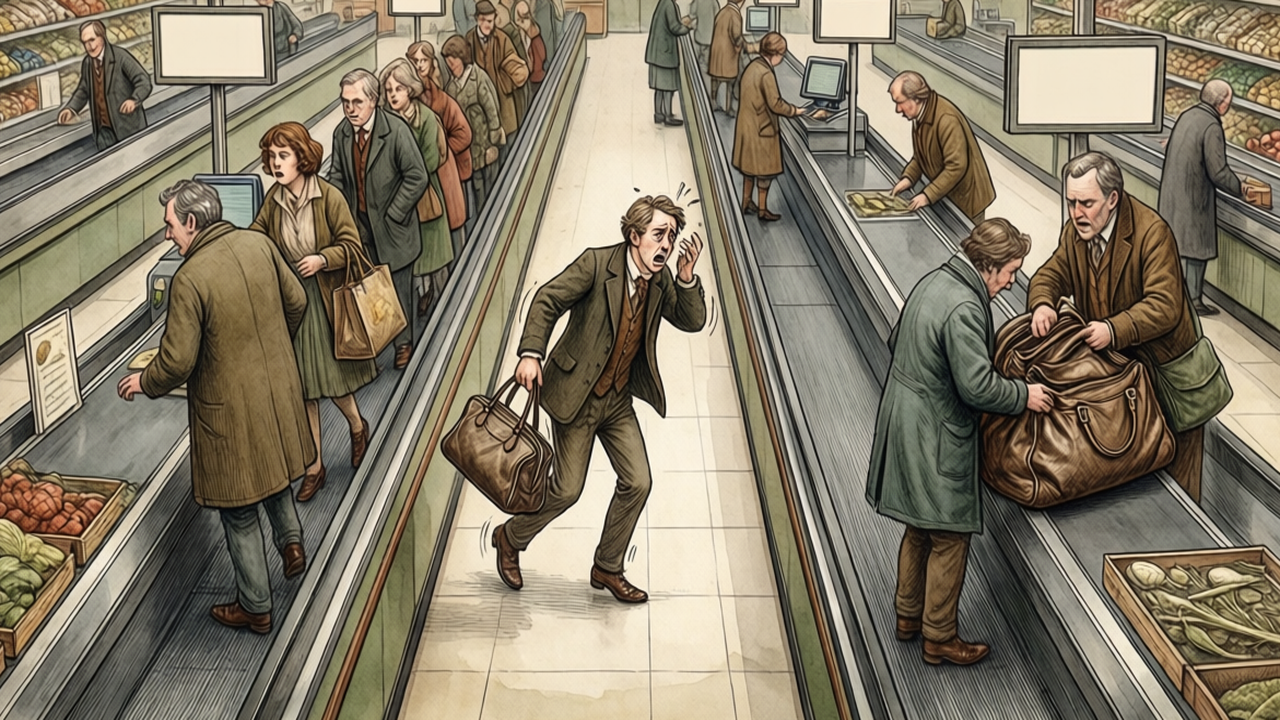
Scientists have studied this animal properly. In 1909, the Danish engineer Agner Erlang worked out how many telephone operators Copenhagen needed so customers would stop waiting — and invented queueing theory. In the 1950s, British mathematicians took stopwatches to London bus stops and published papers about it. Today every supermarket, call centre and theme park runs on that mathematics. The formula is flawless. It was never once consulted with the humans.
And here is the thing the mathematics cannot cure: the second-fastest-lane delusion. Every human in every queue privately believes the other line is moving faster. The belief is so universal that field biologists have given it a name — “being wrong.” The other line is not faster. The other line merely contains fewer people still searching for their loyalty cards. And yet, every time, without fail, we cross over. Agner Erlang spent his entire career proving this feeling wrong. The feeling has never cared. Not once.
Threats to the species
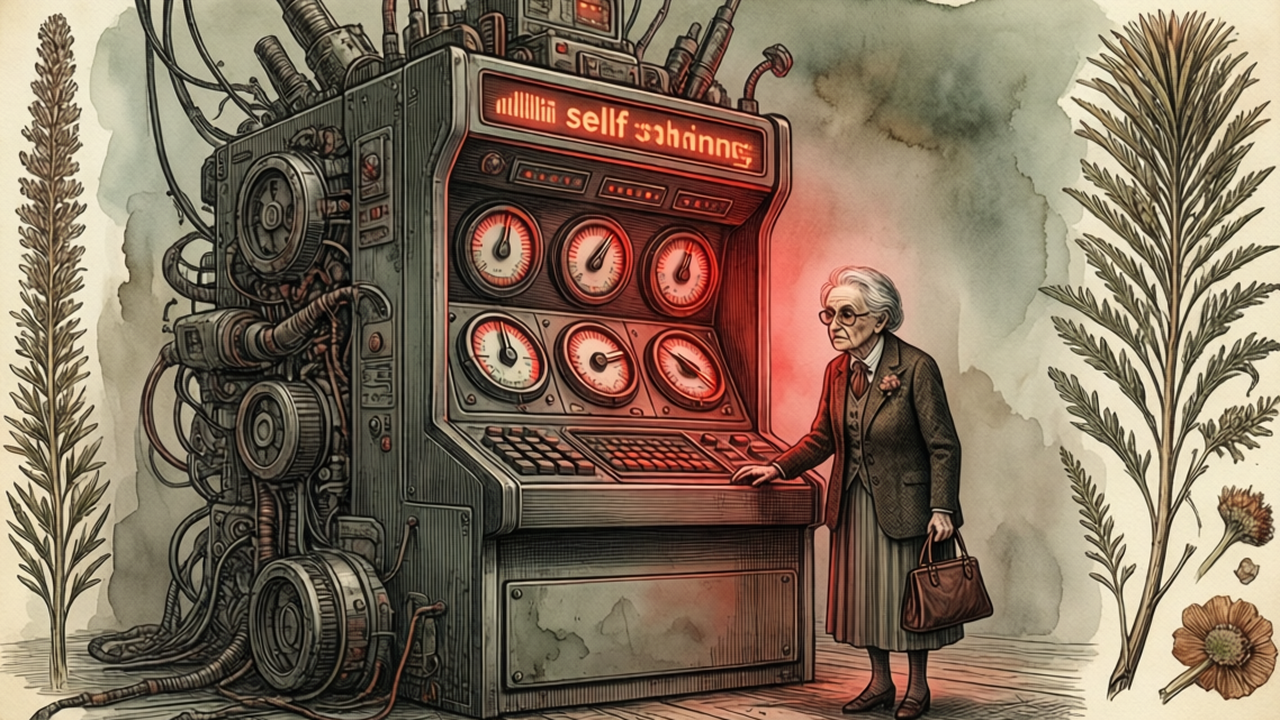
The species is now under threat. The self-checkout machine — a machine that shouts at pensioners — has split one calm queue into five anxious ones. Then came the virtual queue: an app that lets you wait for a restaurant table wherever you like. It sounds like progress. It is not. It removes the queue’s one great social function — standing perfectly still while quietly judging strangers.
And car parks have virtual queues now. Britain has produced an app that stops you standing outside a car park. Nothing is sacred any more.
The one who ruins it
Ask any human what ruins a queue and they’ll name a type. The loud talker. The phone film-er. The person who asks a stranger how long they’ve been waiting, knowing exactly how long. But field observation points to a single culprit.
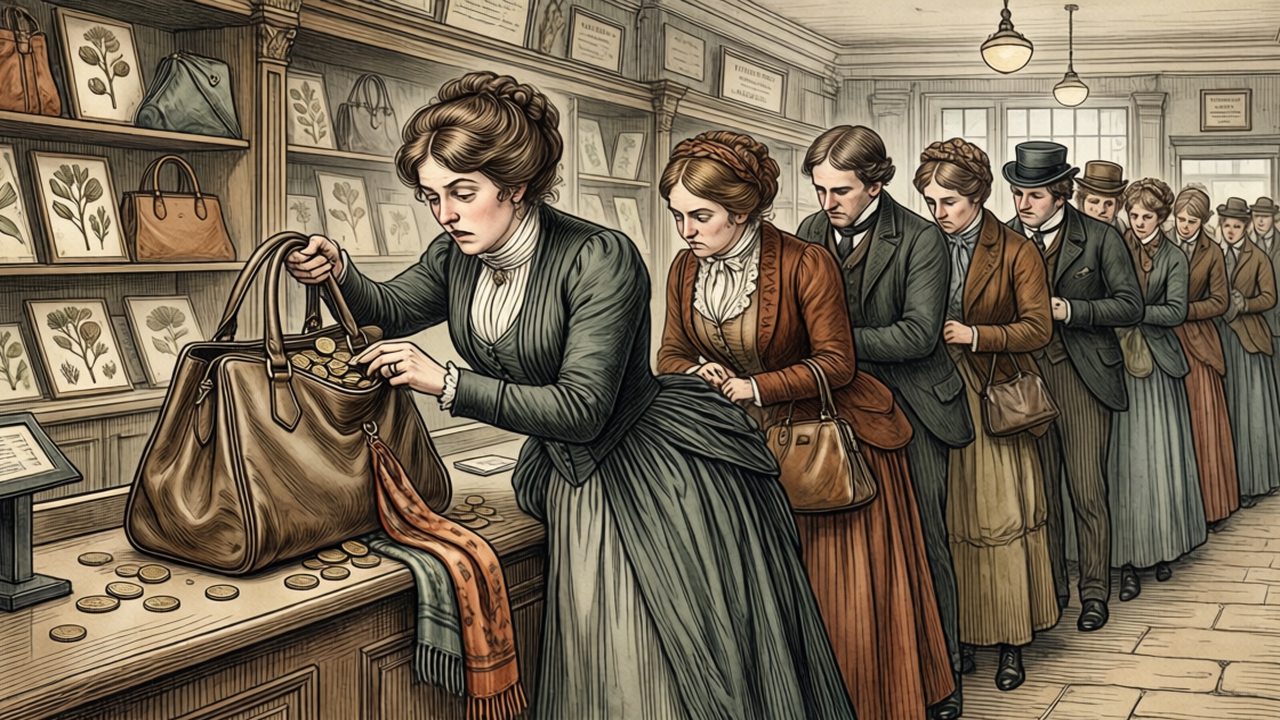
The one who ruins the queue is the one who reaches the front, begins to pay, then remembers an item. And goes back. And searches. The queue behind does not move. The queue behind does not speak. The queue behind simply leans in. And that is the sound of two hundred years of politeness, straining at the seams.
Conservation status: enduring
And yet, there is hope. In the age of apps, and delivery, and drones dropping shopping into gardens, the British human still queues. For coffee that takes four minutes. For a table that is already free. For the last parking space at the pub, while three empty ones sit in row B — visible, legal, and somehow unacceptable.
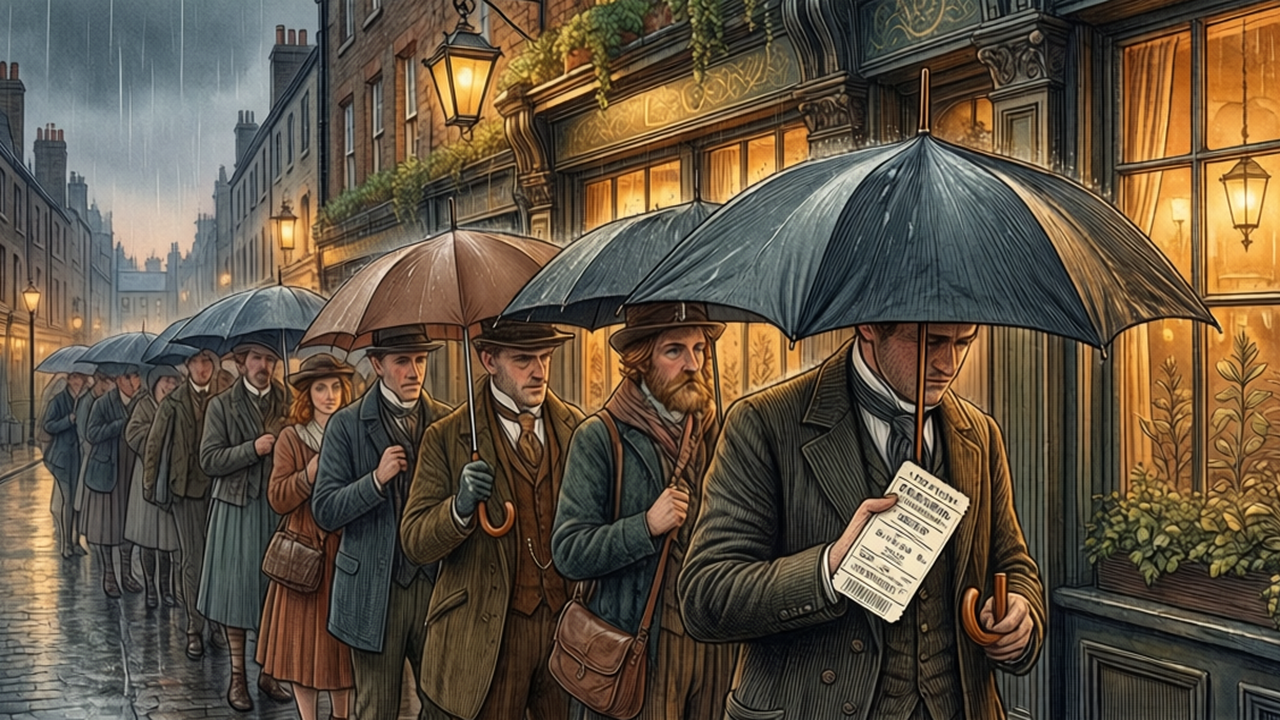
Because a queue is an act of faith. That fairness exists. That someone is in charge. That standing still, together, in the rain, counts as civilisation.
The question, eternal
The herd has now reached the front — and immediately asked if it’s the right counter. Somewhere on a high street, a lone figure approaches an ambiguous gap. And asks the question. As they always have. As they always will.
“Sorry… is this the back?”
Written and narrated by Kevin Hermes. Plates are original illustrations.