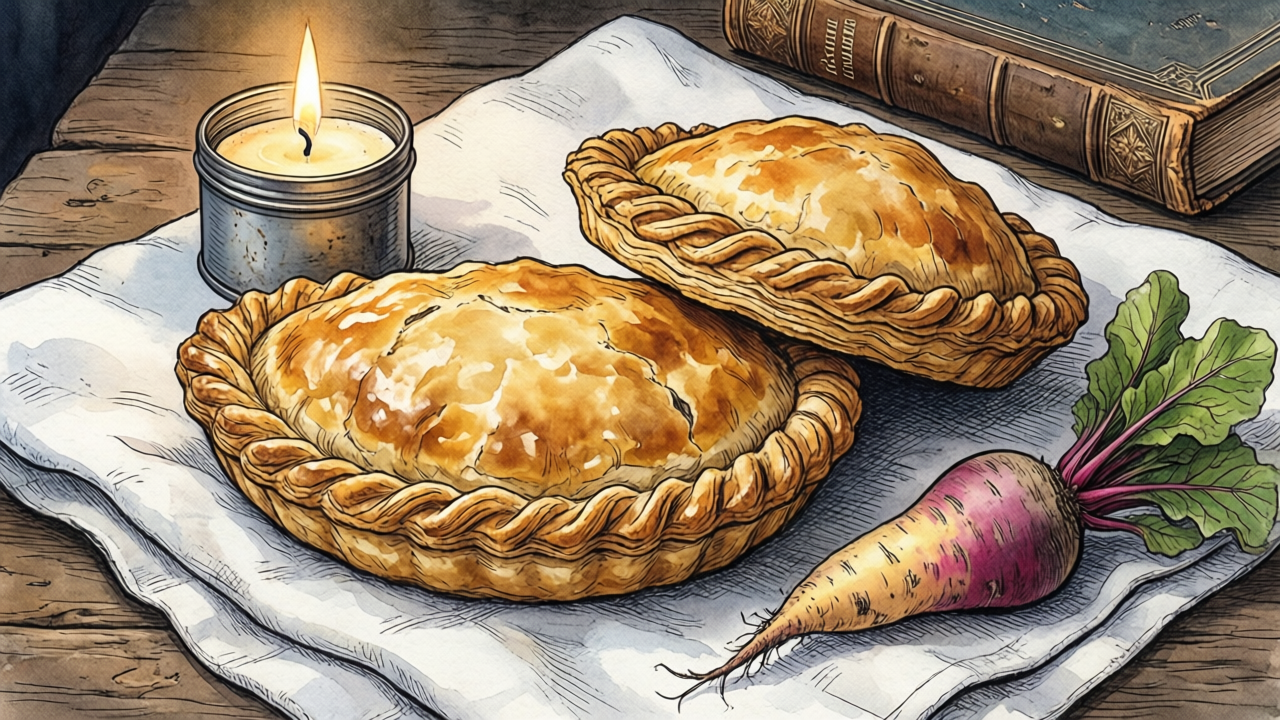
There is a dish in this country so load-bearing that it has a filing number. In July 2011 the European Commission entered “Cornish Pasty” onto its register of protected geographical indications — Regulation 717/2011, entered into force 1 August of that year, still on the books and still doing its job. Most protected foods are exotic and slightly smug about it. This one is diced beef, potato, swede and onion in pastry, and it has paperwork.
The specification is a masterpiece of British understatement. The pastry case must be “savoury and robust enough to retain shape throughout the cooking” — which is how legislation says “sturdy enough to survive a tin mine”. The meat content must be no less than 12.5% and the vegetable content no less than 25%, and then, in what may be the funniest sentence in European law, the document concedes that “traditionally, in Cornwall ‘swede’ is referred to as ‘turnip’ so the two terms are interchangeable, but the actual ingredient is ‘swede'”. Twenty-three languages of drafting committee, and it all comes down to two root vegetables who’ve had an argument since someone first dug one up.
A dish with a statutory instrument is not really a recipe; it’s a position you take while eating. So here is the position, filed in full.
Ingredients
- For the pastry: 300g plain flour, 150g lard or vegetarian frying fat (the traditional one is lard; the specification doesn’t specify and neither will we), 1 tsp salt, around 150ml cold water
- For the filling (two pasties): 200g beef skirt, diced — that’s the cut the trade uses, and your butcher will know exactly what you mean; failing that, 200g diced braising steak from the pre-packed aisle and no names shall be called
- 200g potatoes, peeled and diced small (5mm — small, not “diced”, not “roughly”)
- 150g swede, peeled and diced small (called a turnip in Cornwall; the filing says swede; we defer to the filing)
- 100g onion, finely diced
- Salt, plenty of black pepper, and one beaten egg for the glaze
Method
- Rub the fat into the flour and salt until it looks like an honest shortcrust, bind with cold water, knead it barely at all, and rest it 30 minutes. All good legislation includes a mandatory rest period; it’s where the hard part is.
- While it rests, dice everything. The filling goes in raw — no browning, no sweating, no “building up layers of flavour”. The Cornish pasty is the only celebrated British dish that admits it started life as four raw cubes and a bit of pepper, and is unbothered.
- Mix the filling in a bowl with a good grinding of black pepper and a small pinch of salt. Season the filling, not the pastry — the pastry is the envelope, and nobody seasons an envelope.
- Roll the pastry and cut two rounds of about 20cm. A side plate is the official guide; the specification does not endorse specific plates, but the trade consensus is firm.
- Mound the filling on each round, slightly off centre, leaving a clean border. That border is the margin — every official document needs one, and so does every pasty.
- Brush the border with water, fold the pastry over to make a D, and press. It should look like a D that could stand up in a hearing.
- Now the crimp — the signature on the form. Along one side, not the top; side-crimping is what distinguishes it from the rest of the field and from every lie sold in a motorway car park. Tradition says around 20 crimps; nobody has ever audited this and the trade is relaxed about it. Crimped right-handed, it’s called a hen pasty; left-handed, a cock pasty. The paperwork on this one has not been seen.
- Glaze with the beaten egg. The specification permits a glaze “based on egg or milk”; the egg gives the shine of a document that has just been stamped.
- Bake hot — 220°C for 20 minutes — then turn it down to 160°C for another 30–40, until it’s bronze and the juices run clear. Public-buildings heating, essentially: blast it on arrival, then a long, unglamorous background temperature.
- Rest it ten minutes. The pastry is robust but the filling is effectively boiling stew, and instant-justice is not in the statute.
Serve it hot, or — and this is the historic position — cold, which is the only way the dish has ever really wanted to be eaten. The crimped edge was the miner’s handle: hold it there, never touch the filling, and the crust itself got thrown away. Two hundred years of British food service, summed up as “the bit you hold is the bit you bin”. A vegetarian variant is not officially admissible, but the filling has always been the quiet part of this arrangement: thickly sliced mushrooms with a drained tin of butter beans and an extra scoop of swede, same seasoning, same crimp, same D.
They keep three days in the fridge and reheat like they’ve been re-submitted. As for PGI status: you made this in your own kitchen, which is nowhere near Cornwall, so strictly speaking what you have baked is a pie with delusions of jurisdiction. File it anyway.