It is half past nine in the Grand Pump Room, Bath. A string quartet is playing something polite. A queue of visitors is edging toward a marble vase that dispenses water at a temperature best described as unbiased, each holding the famously handled glass, whose handle exists so that your hand never touches the part other people’s mouths have had a vote on. The room itself was built between 1789 and 1799, opened by the Duchess of York on 28 December 1795, and stands on a site where Beau Nash had the first pump room put up in 1706 because he understood, earlier than anyone, that Bath’s real export wasn’t stone or wool. It was water and an audience. The whole fashion traces back to one man: Thomas Guidott, who set up medical practice in Bath in 1668 and published a book about the hot waters in 1676 that did for Bath what a good review does for a restaurant — the aristocracy simply started arriving.
The waters themselves were never pretending to taste nice. Up in Harrogate, the Old Sulphur Well fed a stone rotunda from 1842 where invalids drank water with the flavour profile of a boiled egg’s opinion, and the town bottled the stuff in torpedo-shaped bottles stamped bottled at the Royal Pump Room, Harrogate and posted the cures out to the entire country. It was a serious economy: Bath’s Pump Room architect, Thomas Baldwin, handled the money for all that Bath stone grandeur, was dismissed for financial mismanagement, declared bankrupt in September 1793, and left his intended portico half-built on the north front — making the Pump Room the only spa in Britain whose builder collapsed under the strain, while the water kept flowing, unbothered, as water does. Visitors too faint for the walk could be pushed around town in bath chairs. The last man to run a rank of them in Harrogate, a Mr Robinson, retired in 1931. That is roughly how long the cure stayed in fashion: longer than any other British health idea of the century, and longer than its architect’s solvency.
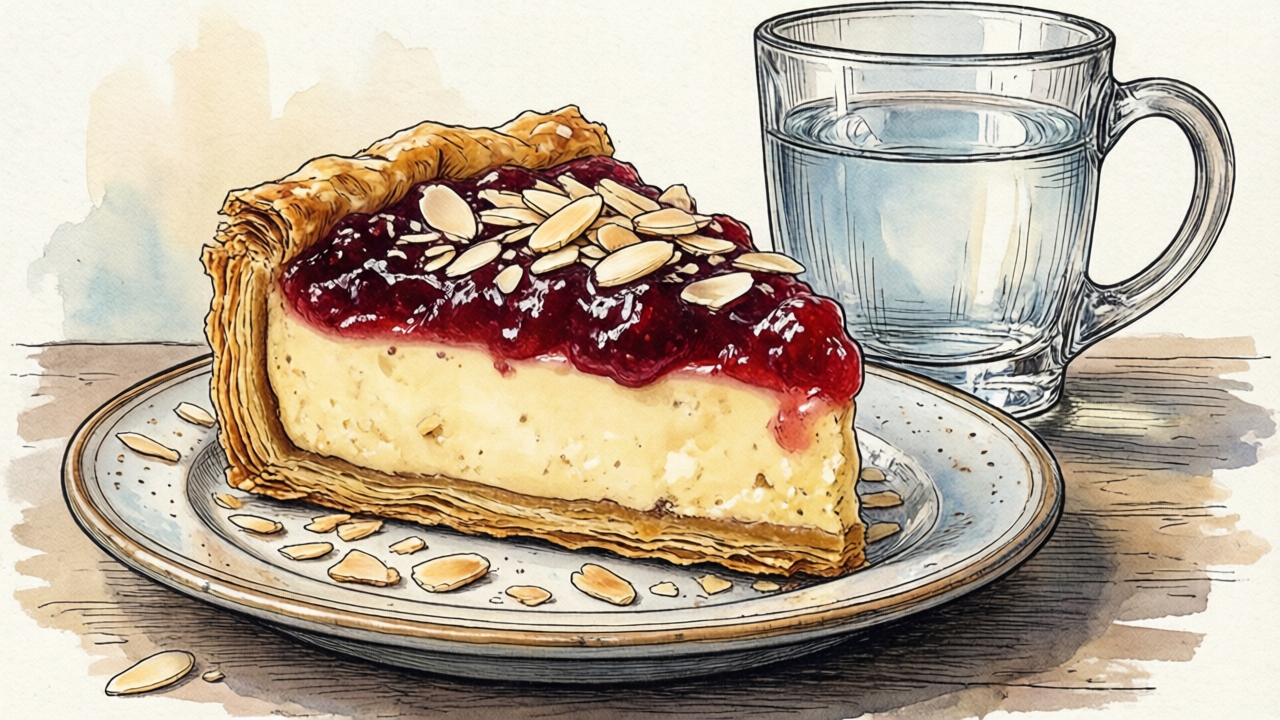
Here is the thing about the Victorian cure, though: every single one of them is dead except one, and the survivor isn’t a water. It’s a Derbyshire pudding that never once claimed to cure anything. The Bakewell pudding — the original, the pudding, not the iced shop tart, which is what happens when a cure gets franchised — arrived wrapped in its own medicine story: a cook at Bakewell’s White Horse Inn, the tale goes, was making a jam tart around 1820 and mistakenly spread the egg-and-almond-paste mixture over the jam instead of stirring it in, and the accidental custard that set inside the shell was an instant hit. One wrinkle: the White Horse Inn was demolished in 1803 to make way for Rutland Square. The founding myth is wrong about the building. A legend that contradicts itself isn’t a myth, it’s a British pub. What can actually be verified is better in its way: a printed recipe in The Magazine of Domestic Economy in London, 1836; Eliza Acton putting one in Modern Cookery in 1845, which quietly disproves the rival theory that it was invented in 1860; and Mrs Beeton printing two versions in 1861, one on pastry and one on breadcrumbs, like two consultants publishing duelling prescriptions for the same complaint. So here is the prescription. As always with the waters: take in company, take while it lasts, and never believe the brochure.
Ingredients
- 325g ready-made flaky pastry, from the chilled aisle — not shortcrust. The flaky-versus-shortcrust line is the exact border between pudding and tart, and the tart is the franchise version.
- 150g raspberry or gooseberry jam (the older recipes favour gooseberry; raspberry is what the modern spa does, and nobody has ever been harmed by it)
- 200g marzipan block, coarsely grated — this is the almond paste the original calls for, sold next to the icing in every Tesco, Sainsbury’s and Asda in the land
- 125g butter, softened, plus a little for the tin
- 125g caster sugar
- 2 eggs, plus 2 extra yolks
- 2 tbsp flaked almonds
- Icing sugar, for dusting
Method
- Unroll the pastry and line a 22–23cm loose-bottomed tin, buttered first like a courtesy the Victorians would have charged admission for. Let the overhang stand proud; the filling is generous and the pastry is load-bearing.
- Chill the lined tin for 15 minutes while the oven reaches 190°C / 170°C fan. The recipe prescribes a rest, which remains the only prescription in British medical history never to have been disputed.
- Line with baking paper and baking beans and bake for 10 minutes — just enough colour to know the base is alive, not enough to finish it. It has a filling to get through first.
- Rub the jam through a sieve with the back of a spoon. The 19th-century recipes say sieved jam, because no cure worth its name contains lumps. You will eat the seeds off the spoon privately, like a dose.
- Beat the grated marzipan with the butter and sugar until pale and creamy, then beat in the eggs and yolks one at a time. The mix will turn split and curdled and look like a failure. It is not a failure. Every Victorian cure looked worse than this and got prescribed anyway.
- Spread the sieved jam over the base in one honest layer, then pour the almond mixture over it and smooth the top — jam underneath, almond above, which is precisely the mistake that invented the pudding, according to a cook writing decades after her inn was demolished. Scatters of accident, polished into heritage: this is the national method.
- Scatter the flaked almonds over the top and bake 30–35 minutes, until the edges are set and the centre still moves when you nudge the tin. Do not open the door for the first 20 minutes; no cure has ever been improved by being checked on every three minutes.
- Leave it in the tin for 10 minutes, then release. The centre should wobble the way the Old Sulphur Well did: confidently, while committing to nothing.
Dust with icing sugar and take warm, with cream or a barely-thickened custard — or take cold, straight from the tin, which is how the leftovers conduct themselves anyway. The pudding keeps three days in the fridge, during which you can go back to it, feel no dramatic change whatsoever, and emerge insisting it has done you good. That, more or less, is the entire spa industry compressed into a dessert — and unlike the waters of Bath, which are still flowing and still taste of nothing you’d order twice, this cure has never once sent anyone away in a bath chair.