There is a soup in Wales that has never once admitted what course it is. Not metaphorically — structurally. A proper cawl is one pot that files two jobs. You strain off the broth, thicken it with oatmeal, and serve it in a bowl as the first course. Then you take the same pot — the meat in it, the vegetables in it — and serve them a few minutes later as the second. The Welsh engineered a dish that has booked itself into both slots on the menu, and have been quietly getting away with it since at least the fourteenth century. The word itself is first recorded in Welsh in the 1390s, and even its parentage is a committee argument: Latin caulis, a cabbage stalk, or Latin calidus, meaning warm — which is also where Spanish got caldo, their word for broth. So the national dish of Wales is named, possibly, after a Latin vegetable offcut, in an etymology it shares with Spain. Britain’s most multinational border row has nothing on this.
For most of its six centuries, cawl was also a soup that had never met a potato — those only became a core ingredient after arriving in Welsh kitchens in the later half of the eighteenth century, which is roughly when British cooking stopped being suspicious of dirt. It was cooked in an iron pot hanging over the fire and eaten with wooden spoons, in the part of the country that owns more rain per square mile than anywhere sensible. And north of the mountains there is a cousin called lobsgows, where everything is cut smaller and the broth is left unthickened and it all arrives as one course — which is how most cawl is served today, and which southerners regard as a kind of rumour. Lobsgows is also the name Liverpool gives to a stew of nearly the same idea, so the dish has its own taxonomic dispute thrown in free.
It matters right now, because November is cawl weather and there is no better soup for a Tuesday. Both courses reward the same patience, cost about the same as a takeaway, and the whole operation runs on cuts the butcher still prices like they’re a rumour. This recipe pulls the two-course trick properly, because the trick is the dish, and because you have never once seen a British dinner commit to anything this hard.
Ingredients
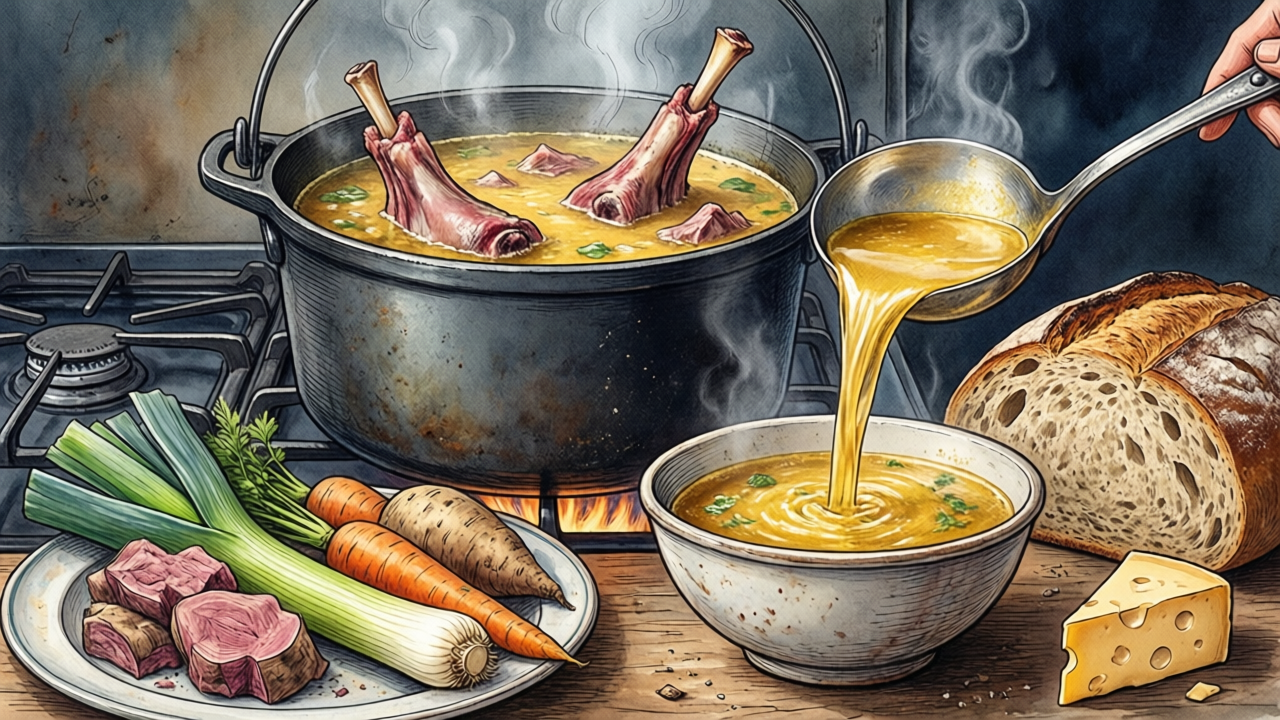
- 1kg lamb shoulder, on the bone, cut into large chunks (beef brisket or shin works too, and the old recipes, which had never met a potato, would nod along)
- 2 litres cold water, plus more to top up
- 2 large carrots, peeled and cut in chunks
- 1 small swede, peeled and cut in chunks
- 3 medium potatoes, peeled and halved if small
- 3 large leeks, trimmed, white and light green parts only, sliced thickly
- 1 onion, halved
- 2 bay leaves
- 3 tablespoons medium oatmeal (porridge oats will do; this is the bit that makes it cawl rather than nice lamb soup)
- Salt and black pepper
- To serve: crusty bread and a block of Caerphilly or other mature Welsh cheese, served separately, like always
Method
- Put the meat in a large pot with the cold water and the onion halves. Bring it barely to a simmer and skim off any grey scum as it rises. This is the only part of cawl done in a hurry, and even then it’s a polite hurry: take the scum, don’t argue with it.
- Add the carrots, swede and bay leaves. The chunks should be generous — nobody has ever been refused seconds of cawl for cutting the swede too large. Aim for pieces with ambitions.
- Cover and keep it at the barest simmer for an hour and a half. The pot should be doing what the valley kitchens’ pots used to do: put on in the morning and left, more or less, to run the house. If it’s bubbling hard, you’ve turned a patient dish into an anxious one.
- Add the potatoes and leeks, and simmer another half hour, until the meat falls off the bone and the leeks have stopped being vegetables and joined the broth as colleagues.
- Fish out the bone, the onion halves and the bay leaves. Discard them, which is the only hard instruction in six hundred years of recipes and is still open to appeal.
- Bring the broth back to a simmer, sprinkle in the oatmeal and stir. This is the moment the soup changes careers — thin broth becomes cawl, the way a man in a jumper becomes a man with a plan. Five minutes to thicken.
- Now the two-course manoeuvre. Ladle the thickened broth into bowls and take it to the table as the first course. This is a planned divorce: the pot has filed for both jobs and the courses arrive from the same kitchen. Take the pot off the heat while the bowls are being admired.
- Return the meat and vegetables to the pot, cut the meat into serving slices, and bring it back through the heat. Serve as the second course, on plates, with bread and a wedge of cheese the size of a building brick set beside it separately — bread and cheese in a cawl serving are a separate plate, a separate course, and in some valleys a separate religion.
It keeps three or four days and reheats better than it started, which is the mark of a dish that has made up its mind. Vegetarian version: leave out the meat, use vegetable stock, double the leeks and add a tin of drained butter beans and a handful of lentils to the step four mark — cawl cennin, the leek cawl, already exists without meat and has existed for centuries, so the beans are just modern manners on an old licence.
Serve both courses without comment, the way they do. Six centuries on, and the soup has still never told anybody what course it is — which, in a country that has never managed to make up its mind about anything else on the table, is either the definition of a national dish or the world’s most confident canapé.