Christmas has been outlawed exactly once in British history, and it was not the Scots who did it. In June 1647, the Westminster Parliament abolished the celebration — the feasting, the greenery, the mince pies — on the grounds that they were “popish idols”. The Westminster Assembly went further in print, calling the whole December business “popish idles, or the Devil’s supper”, and one pamphleteer of the 1640s singled out the dessert itself for prosecution under the title The Popish Idol of the Mince Pye.
Here is what the prosecutors forgot: the pie they were so worried about was already the most repealed dish in Britain. The original mince pie contained actual minced meat — beef or mutton, shredded suet, apples, spices, dried fruit — a medieval preservation trick that kept winter meat edible. When Charles II restored Christmas in 1660, the cook Robert May published a mince pie recipe in The Accomplished Cook with the instruction “take your mince, and spice it extremely well”. The mince, at that point, was the meat. It took three more centuries for the meat to be repealed quietly, this time not by Parliament but by jarred mincemeat — most modern versions keep only the suet as a souvenir of the offence.
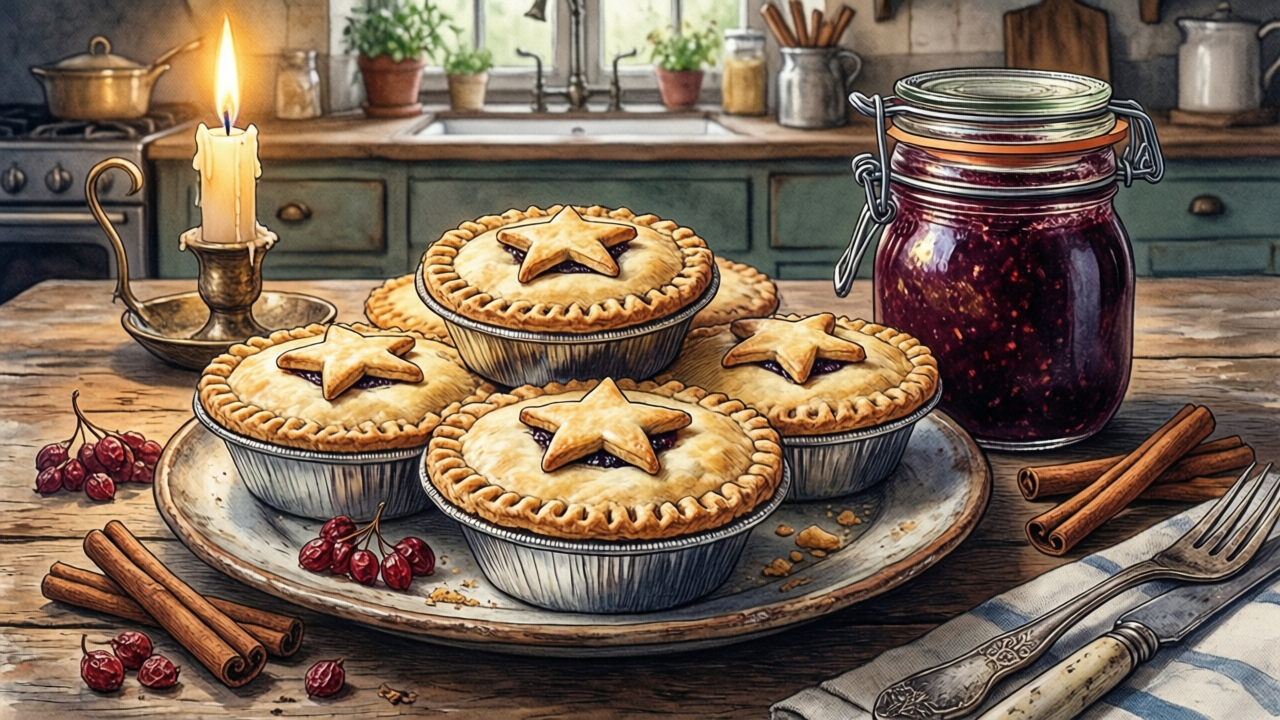
So this is the pie with the charge sheet intact: a restored, restuffed, properly meaty mincemeat, in pastry with a star cut in the lid — the popish emblem the pamphleteer found so objectionable, restored to its rightful place, which is a pudding.
Ingredients
- 500g beef mince (the cheap, well-flavoured kind)
- 100g shredded suet, plus 25g butter
- 2 large onions, finely chopped
- 3 cooking apples (Bramleys), peeled and grated on the coarse side
- 225g mixed dried fruit — currants, sultanas, raisins
- 60g currants, for texture and malice
- 75g soft brown sugar
- 2 tsp mixed spice, 1 tsp cinnamon, a good grating of nutmeg
- 2 tbsp malt vinegar (the historically authentic sour; lemon does it in an emergency)
- A splash of stout or extra vinegar if the pan gets dry
- 1 sheet all-butter puff pastry, plus another if you feel unrepealed
- 1 egg, beaten, for glazing; caster sugar for sprinkling
- Veg variant: skip the beef, add a third grated carrot and a third grated apple and use vegetarian suet — the filling has been halfway to vegetarian in half the jars in Britain for a century anyway, this just stops pretending.
Method
- Melt the butter with half the suet in a wide pan and sweat the onions low and slow, ten minutes or so. Gentler than the Interregnum: nothing in this pan should colour until the law says it can.
- Add the mince and raise the heat, breaking it down hard and browning properly. This step is the original offence — minced meat in a dessert, stated plainly, in front of the pamphleteer.
- Stir in the remaining suet, the grated apple, all the spices, sugar, dried fruit and currants, and the vinegar. Robert May’s 1660 restoration instruction was “spice it extremely well”, which is the only recipe direction in the English language that has never been disputed. Apple softens, fruit swells, splash of stout if it dries — the filling should look like a crime scene at harvest time.
- Simmer uncovered twenty minutes, stirring now and then, until it’s thick and jammy and staining the wooden spoon. This cannot be rushed. Nothing with a ban history tastes right when hurried.
- Off the heat, cool it, and — if you like a pie with paperwork — spoon it into a clean jar and keep it a fortnight. Historical mincemeat actually improved with keeping, which is the only part of the Puritan case that was ever proven.
- Oven 190C fan. Roll the puff and cut discs — a 7cm cutter, twelve or so — and press most of them into a tart tin or tray, patches of pastry mended where they tear. Repairs are period-accurate; nothing about the 1660 settlement was seamless.
- Spoon in heaped filling — a generous tablespoon per pie, filling to the brim, because the first mince pies were the size of the table and shrank across four centuries out of simple embarrassment. Lay remaining pastry discs on top, crimp hard.
- Cut a star in each lid. This is the popish emblem, restored. The pamphleteer objected; the star won; put it back proudly.
- Brush with beaten egg and bake 20–25 minutes, until puffed and gold and one or two have leaked. A leaking pie at this point is not a fault; it’s a demonstration.
- Five minutes out of the oven, then sprinkle with caster sugar while the glaze is still tacky. Serve warm, the only legal way.
Serves twelve, which is unlucky only if you count wrong. The proper superstition is to eat a mince pie at eleven different houses for luck — the “try eleven” — and to refuse a mince pie offered to you is bad luck in every version of the custom I’ve seen, which makes this the only Christmas law in Britain that has ever been voluntarily obeyed. The filling keeps weeks in a jar and improves; the pies do not keep at all, which is also historically accurate. Christmas survived the repeal. The meat didn’t. This puts the meat back in, the star back on, and the whole contested pudding exactly where every side of the argument secretly wanted it: on the table.