On Wednesday, the most powerful spreadsheet in English football got down to a single cell. David Kogan, chair of the Independent Football Regulator, sat in front of the Digital, Culture, Media and Sport Committee and reduced four years of negotiation to one sentence: “They started with 19 deal points. We’re now down to essentially down to one.” The one thing left is a number. That number is £27 million a year, and the Premier League is, in Kogan’s words, “resolutely saying that it can’t afford to.”
The numbers, finally on the record
Kogan’s evidence to MPs on 25 November was the first time any of this has been stated on the parliamentary record, and it was more specific than anything either league has published. The Premier League’s current proposal, as Kogan described it: £320m a season in solidarity payments to the EFL, up from today’s £140m — a 129 per cent increase — plus another £400m to £500m a season in parachute payments for relegated clubs. “That’s three quarters of a billion pounds going down through the leagues,” he put it. The whole package is worth around £4bn over five years, though honesty requires the footnote: that’s total flow including money that already moves, not £4bn of fresh cash.
The single unresolved point: the EFL wants an extra £27m a year ring-fenced for League One and League Two clubs. EFL chairman Rick Parry has been asking for a deal worth £207m annually in additional payments; Sky reported last week that £180m was on the table at Monday’s summit between the two leagues and the regulator. The £27m is the gap. The two sides are also reportedly squabbling over duration — the EFL would prefer five years, Premier League executives seven to ten.
What £27m actually buys
Here is where I start reading this as what it is: a balance sheet with a pulse attached. Spread £27m across the 48 clubs in League One and League Two and you get roughly £562,500 per club per season — that division of the pot hasn’t been proposed, it’s just for scale. Over the life of the deal it’s £135m, three or four per cent of a £4bn package. Against the £9bn-plus the game brings in annually according to the regulator’s own count, it’s about 0.3 per cent.
Against that arithmetic, “can’t afford” is a negotiating position, not a calculation. But against the balance sheets of the clubs it’s meant for, the same number is structural. The IFR’s draft State of the Game report, published in October and compiled using statutory powers to demand evidence directly from clubs, found that 94 per cent of English football clubs are loss-making, more than 60 per cent of EFL and National League clubs are technically insolvent, and more than a quarter could not survive a month if their owners walked away. Seventeen of them lose money even before they pay a footballer. The average Premier League club earns more than eight times the average Championship side. Kogan’s own summary: “some of our clubs are among the richest and most competitive in the world, others are standing on the edge of financial disaster.”
The clock is the weapon
The interesting part isn’t the money. It’s what makes both parties move at all. Either league can ask the regulator to trigger its statutory backstop and mandate terms — but Kogan warned the process would take “at least two years to take effect.” That’s the slow bomb hanging over the room. Nobody wants it detonated, because during the fuse EFL clubs would, in Kogan’s phrase, “essentially have had no increases in solidarity payments for 10 years” — the current terms date from 2019, a fact that lands harder every season it stays true. Regulation rarely needs to act to change behaviour; it just needs to be plausible.
There’s also a reason the £27m is the last fight rather than the first. Every pound ring-fenced for the bottom two divisions comes out of what Championship clubs were hoping to see, and parachute payments already distort that division so badly that the IFR’s redrafted system is meant to cut the distribution gap between the top and bottom Championship clubs by 40 per cent. Redistribution in football isn’t charity at the top of the pyramid — it’s competition design, and every club reads the rules as a handicap on itself.
Why it reaches the bottom
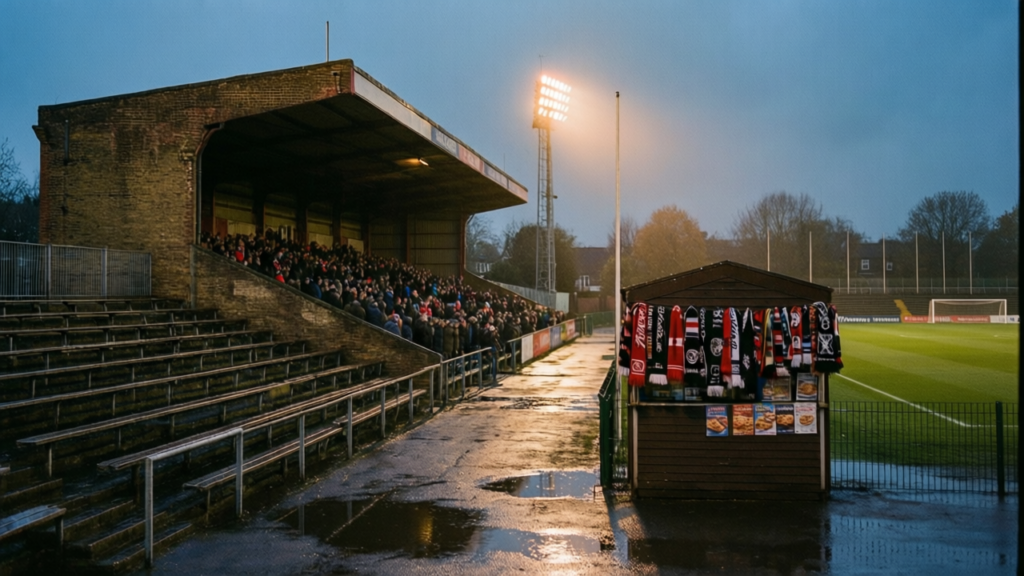
Colchester United play in one of the two divisions this scrap is about, and I’ll spare you the sentimental version: the question of whether the U’s can plan a season, replace a leaking roof, or hold a squad together is downstream of a number being argued over in a committee room in Westminster. That’s not a complaint, it’s just the plumbing. English football’s 92 Premier League and Football League clubs all hang off one cash tap, and the £27m fight is what happens when the tap’s flow is set by committee.
My honest forecast, for what an observer with no skin in the game can see: a deal gets announced, the term lands somewhere between five and seven years, and the £27m gets split in a way both leagues can claim to have won. The thing £27m will not buy is solvency. The regulator’s real leverage is the less photogenic stuff — the hard cash floor and liquidity rules it’s drafting, the possibility that clubs may need £10m in liquid assets just to qualify. Same money, same ratchet, spent by 2031. The nineteen points became one. The real question is whether anyone’s counting the points for next time.
Sources: City A.M. on Kogan’s committee evidence; Independent Football Regulator State of the Game findings; The Pyramid on the £27m arithmetic; Sky News on the summit and the £180m figure. Committee session: parliament.uk.